Showing posts with label arthouse. Show all posts

Thursday, 23 May 2013

Sunshine Cleaning (2008); comedy drama film review


Poster artwork for the comedy drama film Sunshine Cleaning.

Bloody Business by Linh

Who ya gonna call? Not the Ghostbusters but rather the sanitising sisters of Sunshine Cleaning.
Sunshine Cleaning is the latest offering from the producers of hit independent film Little Miss Sunshine, and is based on a real life story about two best female friends in the Seattle suburbs of America, who started a bio-hazard removal/cleaning service.

The film follows the lives of two sisters from Albuquerque who set up a crime scene cleaning service, which involves cleaning and removing body parts and fluids; the cleaning becomes a metaphor for both of them in coping with their mother’s death. Funnily, the name Albuquerque almost sounds like ‘I’ll be quirky’ or ‘all be quirky’, and Sunshine Cleaning has exactly the style of quirkiness found in most independent films these days.

CHEMICAL QUEENS: Rose (Amy Adams) and Norah (Emily Blunt) stock up on detergents and cleaning gear in the film Sunshine Cleaning. Image: Madman Entertainment.

Oscar nominee for the film Doubt, Amy Adams, stars as the hardworking and persevering Rose Lorkowski, who is stuck in a thankless job as a cleaner and subconsciously hangs onto her happy high school years through naughty nights with her married ex-lover, Mac. Rose keeps herself in control of life’s setbacks by reciting words of encouragement to herself such as “You’re strong, you’re powerful, you can do anything”. When her young son is kicked out of school, she is forced to find funds to send him to a top-notch private school and avoid the “specialised schooling” the Principal suggested. After taking on the advice of her ex-lover, Rose starts up her new crime scene cleaning service with her younger sister Norah.

Amy Adams shows her versatility, ranging in roles from the fairytale princess in Enchanted to a god-fearing nun in Doubt. She gives a wonderful performance as a single mother who refuses to let life’s catastrophes (and Rose has many) get her down, and delivers every line with outward cheeriness juxtaposed with inner sadness. It’s her eyes that do much of the ‘acting’ in most scenes and Adams cleverly utilises her facial nuances to great effect.

CLEANING CREW: Rose (Amy Adams) and Norah (Emily Blunt) spray and wipe in the film Sunshine Cleaning. Image: Madman Entertainment.

Playing the role of Rose’s slack and laid-back younger sister, Norah Lorkowski, is the beautiful English actress Emily Blunt, who leaves behind any trace of Britishness to provide a highly convincing American accent. She even pimps up her Americanisms with hip Generation Y lingo such as “being a bastard is a free pass to cool” or “huge woodie”.

Norah was very young when her mother died, and it seems as though she is coping as well as Rose, but the loss of a parent leads her to rebel against conformity/authority and ends in lack of confidence in herself. She still lives with her father and has no direction in life, and feels stuck in the doldrums most of the time.

Emily Blunt plays the irresponsible Norah with both physical and verbal aplomb. She creates a believable slacker through her stooping as though she couldn’t care less and feet-dragging as if nothing is important for her to attend to. Blunt cleverly blends humour with her character’s grimness as it is likely Norah deals with grief through humour.

FAMILY FOOD: The close-knit Lorkowski family discuss the new cleaning business (Amy Adams, Emily Blunt, Alan Arkin, Jason Spevack) in the film Sunshine Cleaning. Image: Madman Entertainment.

Alan Arkin, who appeared in Little Miss Sunshine, is the positively charged Joe Lorkowski, father of Rose and Norah, who continues conjuring up new ideas to make money for his family. After each business scheme fails, he happily moves onto the next without dwelling on past failures or upsets. Arkin’s portrayal of Joe is superb and gives his character the upbeat optimistic fervour in the film. Arkin may be playing fatherly roles in most films, but he always manages to keep it fresh and entertaining.

The film’s theme is death, which is a bleak and almost taboo subject in many cultures and everyone deals with it differently. Sunshine Cleaning puts a positive and happy spin on a job that involves the aftermath of death and some blood-drenched scenes are quite gruesome and stomach-churning. Rose describes it as “we come into people’s lives when they have experienced something profound and sad and we help.”

Removing human body parts and bodily fluids sounds gross and looks awful, but it’s a metaphor for both Rose and Norah in different ways. Rose has been having an illicit affair with her married ex-lover from high school, Mac, and she cannot let go of the ‘popular and prettiest girl’ image of herself in those earlier years. When she finally finds the gumption in letting go of Mac and moving on, it is analogous with a cleansing of emotions and mental anguish which remained since her mother’s death.

In Norah’s case, she experiences an awakening of her repressed sexuality and seeks comfort in the company of new friend, Lynn, whom she found after ‘cleaning’ Lynn’s mother’s house. Norah finds a common bond with Lynn as both their mothers are dead and her meeting with Lynn represents a change in life direction and ‘removing’ herself from a current state of uncertainty and hidden sadness.

BLOOD BOND: Lynn (Mary Lynn Rajskub) suspects Norah (Emily Blunt) is following her in the film Sunshine Cleaning. Image: Madman Entertainment.

The appearance of blood is found in almost every scene that needs cleaning, and has strong significance in the characters’ development throughout the film.
Blood acts as a symbolic image for connection, life force and humanity in general.

In the film, Norah discovers Lynn works as a nurse at the blood donor centre and offers to donate blood. This act of giving blood represents not only a generous act on the surface, but deeper meaning is found when the blood and its components (such as plasma or platelets) are used to save lives; the irony being that Norah may again come across the blood when she ‘cleans’ for her Sunshine Cleaning business. Therefore, blood can be given and lost, which parallels life itself, that is given through birth and lost in death.

The supporting cast is fantastic, especially Jason Spevack as Rose’s young son Oscar whose cheekiness and curiosity lands him in plenty of trouble; Steve Zahn is charming as the ex-lover Mac; Mary Lynn Rajskub (co-star in hit TV programme 24 with Kiefer Sutherland) shines in her minor role as Norah’s potential lesbian lover, Lynn; and Clifton Collins Jr. shows how handy he can be with only one arm as the store owner Winston, and a possible future lover for Rose.

Sunshine Cleaning is an upbeat and enjoyable film, with quirky characters fleshed out through marvellous performances from the entire cast and a rocking musical soundtrack accompanies the film.

SUNSHINE SISTERS: Rose (Amy Adams) inspects the damage while Norah (Emily Blunt) holds back the vomit in the film Sunshine Cleaning. Image: Madman Entertainment.

Director: Christine Jeffs

Writer: Megan Holley (screenplay)

Cast: Amy Adams, Emily Blunt, Alan Arkin, Jason Spevack, Mary Lynn Rajskub, Steve Zahn, Clifton Collins Jr., Amy Redford

Producers: Jeb Brody, Bob Dohrmann, Dan Genetti, Peter Saraf, Marc Turtletaub, Glenn Williamson

Cinematographer: John Toon (Director of Photography)

Original Music Composer: Michael Penn

Film Editor: Heather Persons

Production: Joseph T. Garrity (Production Designer), Guy Barnes (Art Director), Wendy Ozols-Barnes (Set Decorater)

Costume Designer: Alix Friedberg

Running Time: 1 hour 32 minutes

Last Ride (2009); drama film review

Poster artwork for the Australian drama film Last Ride.
 
Journey To The End by Linh

Young film-maker Glendyn Ivin makes his feature directorial debut with Last Ride, a film that is more compelling than the typical road movie. Last Ride is based on Denise Young’s novel about an ex-criminal recently released from prison, who takes his ten year old son with him, after committing a terrible crime.

Ivin collaborated with his producers Antonia Barnard and Nick Cole to create a film that goes beyond the ending of the novel and into darker and deadlier territory. Barnard and Cole added their own creative insights into Mac Gudgeon’s excellent script, and also allowed Ivin to include his own artistic fingerprints.
They are familiar markings, as they bear similar tones of family connections, coming of age and inspirational themes like his award winning short film Cracker Bag.

FINAL FAREWELL: Kev (Hugo Weaving) takes Chook (Tom Russell) to the cemetery in the film Last Ride. Image: Madman Entertainment.

Ivin also gathered his former colleagues from Cracker Bag to work on Last Ride, including film editor Jack Hutchings and cinematographer Greig Fraser.
As Greig Fraser boldly captured the spectacular views, sounds and characteristics of South Australia’s Flinders Ranges from all angles, Hutchings masterfully pieced together all the scenes and sequences into a seamless flow of cinematic imagery.
The superb cast is led by Hugo Weaving (Transformers, The Matrix Trilogy) with child-star-on-the-rise Tom Russell, who plays ten year old Chook.

DANGER: Kev (Hugo Weaving) keeps a close eye on his son Chook (Tom Russell) in the film Last Ride. Image: Madman Entertainment.

Hugo Weaving is perfectly cast as the gruff and quick-tempered former prisoner Kev, whose recent release from gaol reunites him with his son, Chook.
Weaving gives an exceptional performance as Kev, a character who’s scarred from within after years of living and growing up with an abusive father, yet outwardly he shows some tenderness towards his son.

Tom Russell plays Kev’s ten year old son Chook, who slowly becomes closer to his father until he discovers the reason behind their sudden departure.
Russell is able to convey the fear and trust Chook has for his father, while showing courage and tenacity in Chook’s coming of age.


ON THE RUN: Kev (Hugo Weaving) and his son Chook (Tom Russell) walking on Lake Gairdner in the film Last Ride. Image: Madman Entertainment.

Last Ride moves you to a different heart-space emotionally, while moving your gaze away from drab suburbia to the visually alluring outback of South Australia. The stunning Lake Gairdner, northwest of Adelaide and Port Augusta, is one of the few salt lakes you can drive on, and it is magnificently captured on film. The arid, dry and breath-taking panoramic views of the Flinders Ranges and the luscious greenery of the National Parks look enticing. The film showcased the regional beauty of South Australia in all its natural glory. Last Ride is a wonderful emotional and dramatic outback drive with some unexpected Australian humour connecting a desperate father and his impressionable son.

AMAZING: Chook (Tom Russell) is awe-struck by the beauty of The Flinders Rangers in the film Last Ride. Image: Madman Entertainment.

Director: Glendyn Ivin 

Writers: Mac Gudgeon (screenplay), Denise Young (novel)

Cast: Hugo Weaving, Tom Russell, John Brumpton, Sonya Suares, Anita Hegh, Adam Morgan, Kelton Pell, Chrissie Page, Chris Weir, Rachel Francis, Levine Ngatokorua, Mick Coulthard

Producers: Antonia Barnard, Nick Cole, Anthony Maras
 
Cinematographer: Greig Fraser   
 
Original Music Composer: Paul Charlier

Film Editor: Jack Hutchings   

Production Designer: Josephine Ford

Costume Designer: Jodie Fried

Running Time: 1 hour and 40 minutes

Let The Right One In - Låt den rätte komma in (2008); romance horror drama film review

 
Poster artwork for the romance horror drama Swedish film Let The Right One In - Låt den rätte komma in.

Young Vampire Love by Linh

The Swedish romance drama horror Let The Right One In (Låt den rätte komma in) is brilliant and gives audiences a taste of gloriously gleeful gore. Thankfully, this film is all English-subbed (subtitled) and not English-dubbed.
My preference would be to see actors speaking in their natural voices and accents to add believability to the characters. Also, poor lip-synching is a minor gripe.

Let The Right One In is set in the 1980s and centres around the innocent romance between two teenagers who are social recluses finding comfort in each other’s company. Oskar is a twelve year old who is constantly bullied at school and imagines himself seeking revenge by murdering his attackers. He meets the new girl Eli (pronounced Ellie) who moves in next door with her ‘father’ and through showing each other moves on Oskar’s Rubik’s cube, their friendship strengthens. Oskar soon becomes aware of an increasing number of violent attacks and murders around town which began when Eli moved in, and he seeks the truth from Eli.

BLOOD THIRSTY: Eli (Lina Leandersson) lets the blood run free in the film Let The Right One In (Låt den rätte komma in). Image: Magnet Releasing.

Let The Right One In, based on John Ajvide Lindqvist’s novel, is one of the most entertaining vampire films in recent years, due to its film production style, character portrayals and the dark humour is subtle which makes the gory scenes visually satisfying. The Morrissey hit single Let The Right One In, inspired the title of John Ajvide Lindqvist’s novel upon which the Swedish vampire film is based. Swedish director Tom Alfredson worked with Lindqvist to create an eerily bleak setting for the film which gives a sense of calm and serenity, until the viewer gets an eyeful of sudden gore.
The characters also seem dull and ordinary, going about their daily lives unperturbed by the horrors occurring in their community.
It is this mundane dreariness that makes the murder scenes surprising and horrific.

OUTCASTS: Eli (Lina Leandersson) and Oskar (Kare Hedebrant) find comfort in each other's company in the film Let The Right One In (Låt den rätte komma in). Image: Magnet Releasing.

Hoyte Van Hoytema’s cinematography is simple and exquisite with the hypnotic scenes of snow falling, the subtle uncomplicated violent scenes and the cat attack scene are superbly orchestrated.

Kare Hedebrant gives an understated performance as the loner Oskar and he has a wonderful ability in conveying the emotional sensibilities that make his character convincing.

Lina Leandersson as the defiant and sweet-faced vampire child Eli (who is said to be over 200 years old in the novel) is alarmingly charming despite seeming aloof.

The most interesting character is Eli’s ‘father’ or ‘helper’ named Hakan. In the novel he is a paedophile who takes care of Eli and procures blood for her by any means possible. In the film, Hakan’s relationship with Eli is unclear but one assumes he is another one of her ‘lovers’ whom she has seduced in order to obtain blood for her. Per Ragnar is frightening and strange as Hakan, whose constant failure to bring blood for Eli results in his gruesome demise with a personal sacrifice. Ragnar gives Hakan a mysterious persona and a creepiness that is unsettling.

ALL FIRED UP: Virginia (Ika Nord) suddenly self-combusts as her friends watch in despair in the film Let The Right One In (Låt den rätte komma in). Image: Magnet Releasing.
The core of the film depicts human connection, how we change the people who enter our lives and how they change us. The two young characters identify themselves in each other and gain strength and trust through their love. Let The Right One In is brilliantly repulsive and un-nervingly compelling with some of the horrific murder scenes quite comical.
An American re-make (titled Let Me In) released in 2010 with Cloverfield director Matt Reeves at the helm and starred Kodi Smit-McPhee and Chloe Grace Moretz in the lead roles, is entertaining but lacks the more subversive elements of the vampire girl seen in the Swedish version. The Swedish original is as close as one can get to a masterpiece and the American version fails to sustain the same atmospheric mood and intensity of the original Swedish version.

BULLIED: Oskar (Kare Hedebrant) endures another day of bullying by Conny (Patrik Rydmark) in the film Let The Right One In (Låt den rätte komma in). Image: Magnet Releasing.
Director: Tomas Alfredson

Writer: John Ajvide Lindqvist (screenplay and author of novel Låt den rätte komma in)

Cast: Kare Hedebrant , Lina Leandersson, Per Ragnar, Henrik Dahl, Karin Bergquist, Peter Carlberg, Ika Nord, Mikael Rahm, Karl-Robert Lindgren, Anders T. Peedu, Pale Olofsson, Patrik Rydmark, Johan Sömnes, Mikael Erhardsson, Rasmus Luthander

Producers: Frida Asp, Gunnar Carlsson, Ricard Constantinou, Suzanne Hamilton, Henric Larsson, Carl Molinder, John Nordling, Lena Rehnberg, Per-Erik Svensson

Original Music Composer: Johan Söderqvist

Cinematographer: Hoyte Van Hoytema

Film Editors: Tomas Alfredson, Daniel Jonsäter

Production Designer: Eva Noren

Costume Designer: Maria Strid

Languages: Swedish with English subtitles

Running Time: 1 hour and 54 minutes.

The Reader (2008); drama film review

Poster artwork for the drama film The Reader.

Generational Guilt Conflicts With Lasting Love by Linh

Director Stephen Daldry and screenwriter David Hare have remained faithful to the book upon which his Oscar-nominated film The Reader is based. The Reader reflects the emotional depth and thought-provoking material of Bernhard Schlink’s acclaimed book Der Vorleser, however some alterations were made to seek sympathy for and understanding of the character Hanna Schmitz.
The Reader tells the story of a fifteen year old boy, Michael Berg, whose love affair with a mysterious woman twice his age, Hanna Schmitz, during post World War II in Berlin, has repercussions on him later in life. He discovers her secret a decade later when he sees her defending herself in a Nazi war crimes court, but is unwilling to divulge it, as he knows she never wants it revealled.
The film is told in flashbacks where the adult Michael tells how his past experiences may have influenced and affected him in later life.

WELL READ: Hanna (Kate Winslet) listens to Michael (David Kross) read aloud in the film The Reader. Image: The Weinstein Company.

The Reader has been praised and condemned.
Many have found the film to be a moving and provocative drama, while others have seen it as representing Nazi revisionism where the character Hanna Schmitz is a metaphor for the many Germans who’ve committed terrible war crimes and her ‘secret’ is a means of freeing her from the blame and accusations of mass murder.
The Reader has sparked much debate and even some protests against the film and its producers.

The characters in The Reader are superbly portrayed and Kate Winslet's leading actress Academy Award win for this film is well deserved. Winslet plays the tram conductor Hanna Schmitz who brings young Michael Berg to his sexual awakening in the Summer of 1958.
Hanna’s mysterious and abrupt nature intrigues Michael, and she enjoys having people reading aloud to her. She shows much affection towards Michael and is very blunt and straight-forward with him, yet she could never reveal her past or her secret illiteracy to him.
Winslet is disarmingly seductive yet hard-edged as the former Nazi guard, and her German accent is convincing enough. Winslet has conquered a very complex role in her portrayal of Hanna providing soul stirring moments and fascinating insights into a woman who is seemingly merciless and unrepentant.

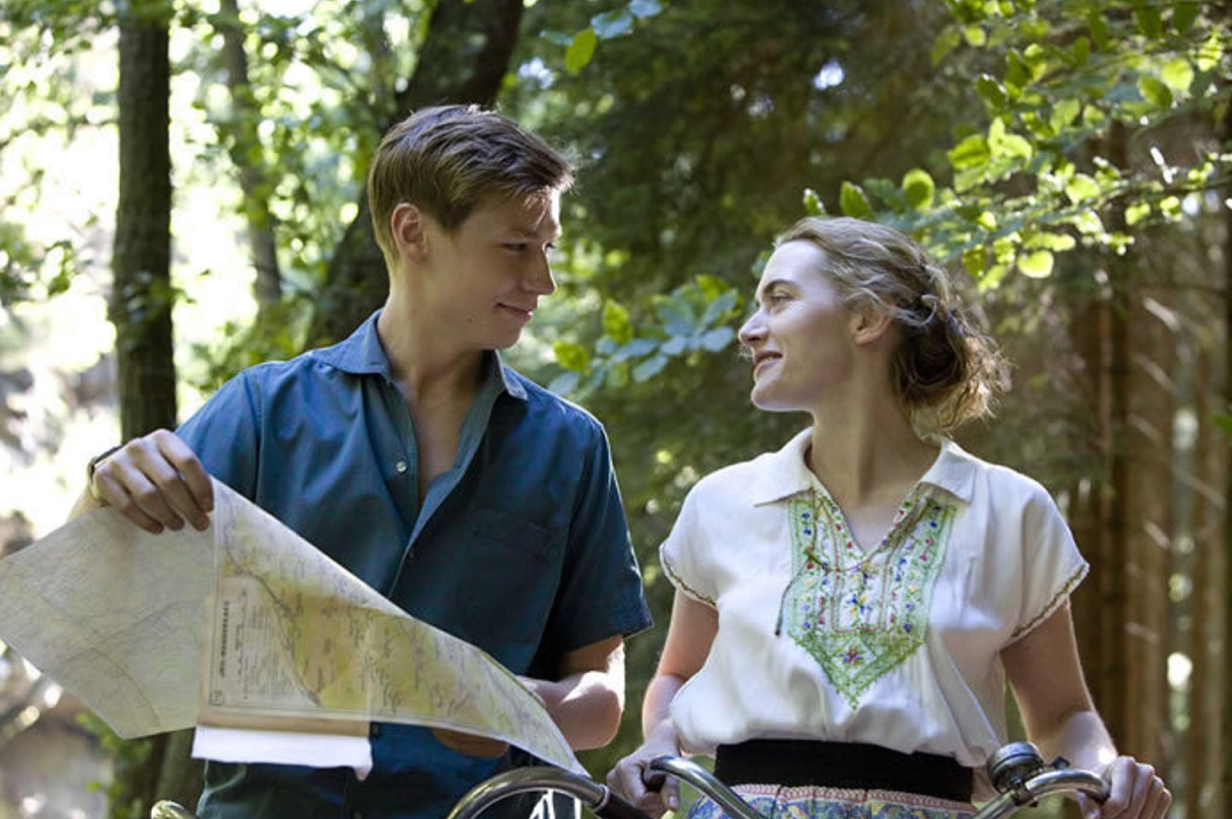
BIKE TRIP: Michael (David Kross) and Hanna (Kate Winslet) take a day off to go biking in the film The Reader. Image: The Weinstein Company.

Young German actor David Kross had to learn English for the role of teenager Michael Berg and he is believable as Hanna’s lover who thought he was “not good at anything”. When Hanna praises him for his reading ability after hearing him read Emilia Galotti by Gotthold Ephraim Lessing, Michael continues to read aloud various literature to her including The Odyssey by Homer, D. H. Lawrence's novel Lady Chatterley's Lover, Anton Chekhov's The Lady with the Little Dog and The Adventures of Huckleberry Finn by Mark Twain.
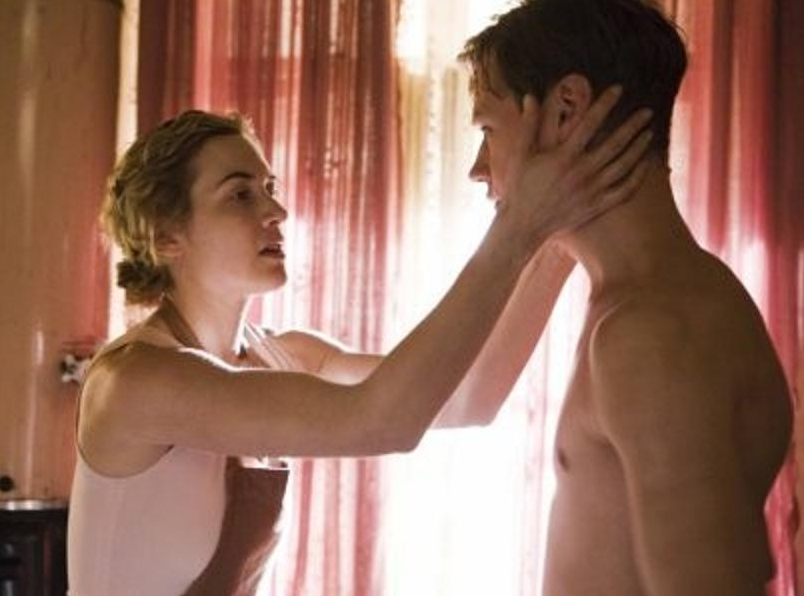
Kross’s character Michael and Hanna’s love scenes were tastefully performed and filmed, and although Michael didn’t know it at the time, the intimate nature of the affair shapes the rest of their lives.
Kross brings intelligence, sensitivity and a maturity to Michael, also showing the deep internal conflict as he grapples with his love for Hanna and revealling her illiteracy. 

INTIMACY: Hanna (Kate Winslet)  is very fond of Michael (David Kross)  and enjoys his company in the film The Reader. Image: The Weinstein Company.

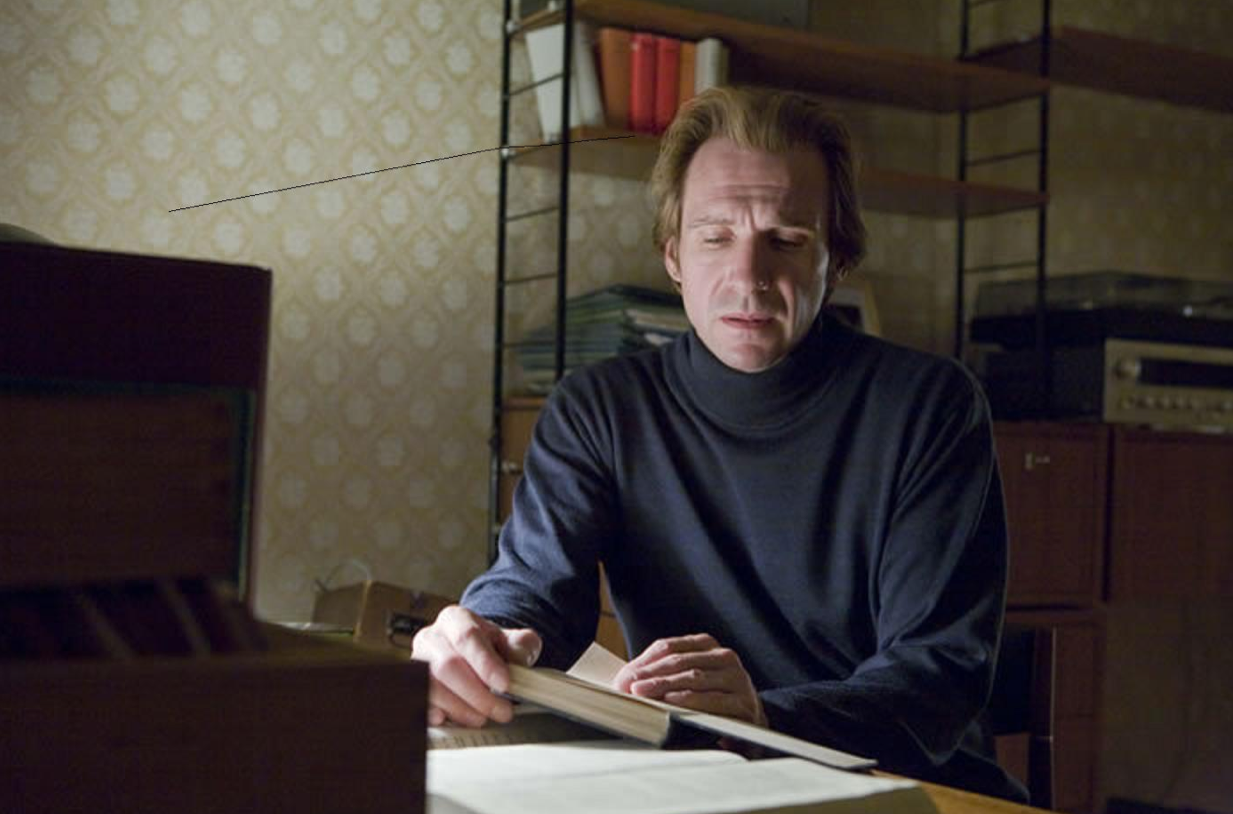
Ralph Fiennes gives a consummate performance as the adult Michael Berg, whose narration and flashbacks form the thrust of the film. Fiennes appears briefly in the beginning and the end, and seems moody, impatient and withdrawn, unlike the young Michael. The youthful exuberance has disappeared and in its place is a wreck whose marriage has failed, his daughter hardly knows him and even his legal work dissatisfies him.
The best scenes involve him recording audio tapes of all the books in his library for Hanna including Doctor Zhivago by Boris Pasternak, Jaws by Peter Benchley, Charles Dickens’s The Old Curiosity Shop and Ernest Hemingway’s The Old Man and the Sea. Fiennes brilliantly creates a character who is a moral conundrum and at conflict with his emotions and thoughts for Hanna.

CONUNDRUM: Adult Michael (Ralph Fiennes) is still feeling the effect of Hanna's love and her secret many years later in the film The Reader. Image: The Weinstein Company.

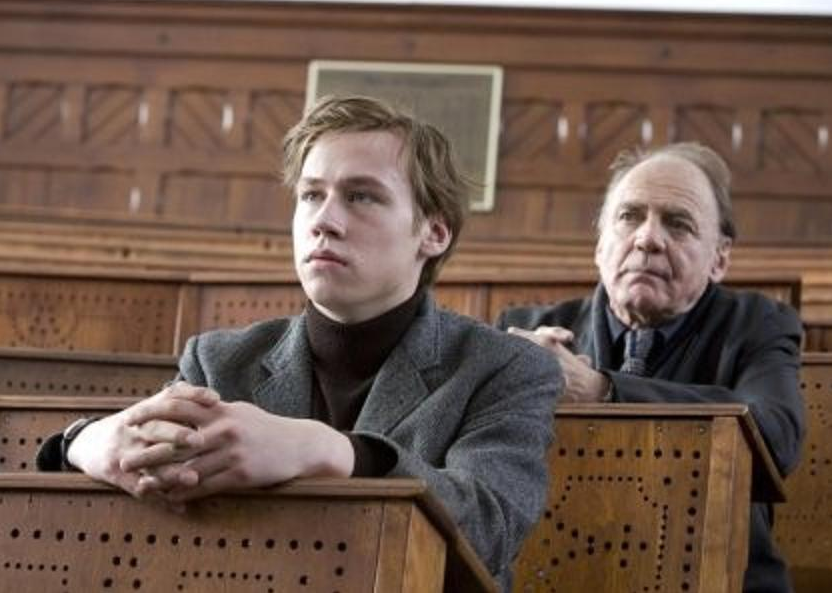
The supporting cast also deliver fine performances including Bruno Ganz (best known for his exceptional portrayal of Adolf Hitler in [I]Downfall[/I]) as Professor Rohl who challenges Michael to question his own morals on the war crimes trial; Lena Olin as the Nazi concentration camp survivor, Rose evokes sympathy and Burghart Klaußner as the Judge presiding over Hanna Schmitz’ trial is effectively commanding.

The film is compelling with enthralling performances, on the subject matter of Nazi guilt, shame, responsibility and the delicate balance of morality. The film also echoes aspects in Bernhardt Schlink’s novel where no-one is asking for forgiveness or seeking redemption. It’s not essentially about the Holocaust but more to do with the aftermath of Germany’s involvement in the Holocaust and its effect on future generations.

MORAL MESS: Michael (David Kross) and his law lecturer Professor Rohl (Bruno Ganz) at a war crimes trial in the film The Reader. Image: The Weinstein Company.

Director: Stephen Daldry

Writers: David Hare (screenplay), Bernhard Schlink (book Der Vorleser)

Cast: Kate Winslet, Ralph Fiennes, David Kross, Lena Olin, Bruno Ganz, Burghart Klaußner, Jeanette Hain, Vijessna Ferkic, Karoline Herfurth

Producers: Jason Blum, Donna Gigliotti, Anthony Minghella, Henning Molfenter, Redmond Morris, Arno Neubauer, Sydney Pollack, Michael Simon de Normier, Nora Skinner, Bob Weinstein, Harvey Weinstein, Charlie Woebcken 

Cinematographer: Roger Deakins (Director of Photography), Chris Menges (Director of Photography)

Original Music Composer: Nico Muhly

Film Editor: Claire Simpson  

Production: Brigette Broch (Production Designer), Christian M. Goldbeck, Stefan Hauck, Yesim Zolan, Erwin Prib (Art Directors), Karin Betzler, Eva Stiebler (Set Decorators)

Costume Designer: Donna Maloney, Ann Roth

Running Time: 2 hours and 4 minutes

Rachel Getting Married (2008); family drama film review

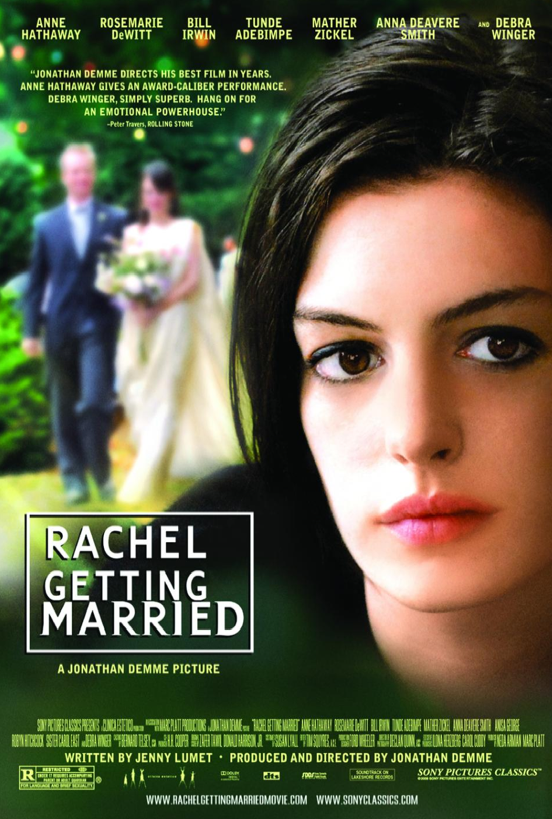
Poster artwork for the family drama film Rachel Getting Married.

Fractured Family By Linh

Rachel Getting Married sees recovering drug addict Kym Buchman released from a rehab clinic for the weekend, to attend her sister Rachel's wedding. Kym's arrival causes painful memories to resurface and simmering resentment and hurt to erupt as the Buchman family deals with the tragic death of a family member several years ago. Amongst all this, the joyous moments of wedding celebrations continue with a diversity of cultures, eclectic music and quirky yet annoying wedding guests.

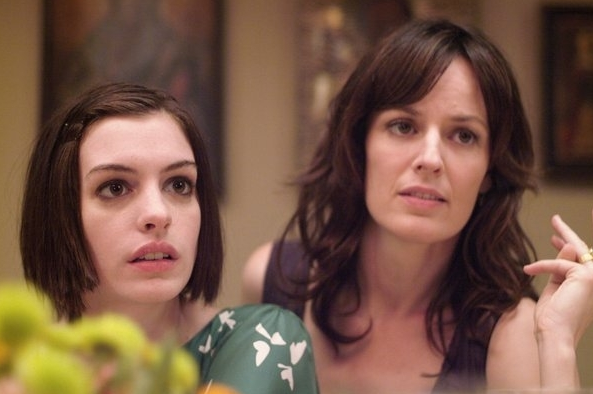
FEEL THE RIVALRY: Kym (Anne Hathaway) and Rachel (Rosemarie DeWitt) attempt to get along in the film Rachel Getting Married. Image: Sony Pictures Classics.

Director Jonathan Demme has always loved the freedom, flexibility and limitless imagination involved in independent film-making, so Rachel Getting Married is a labour of love albeit slightly self indulgent for him. Filmed like a home movie yet with a professional polish to the product, Rachel Getting Married sets itself apart from Demme's big studio hits Silence Of The Lambs and Philadelphia. The roving camera cleverly catches the characters unawares giving the film a spontaneous and refreshing appeal.
Jenny Lumet's brilliant original script about a young, selfish and manipulative drug addict, intimate and involving cinematography by Declan Quinn and a cast as complex and diverse as one could imagine, makes Rachel Getting Married a harrowing, compelling and uplifting family drama filled with tears, tantrums, laughter and love.

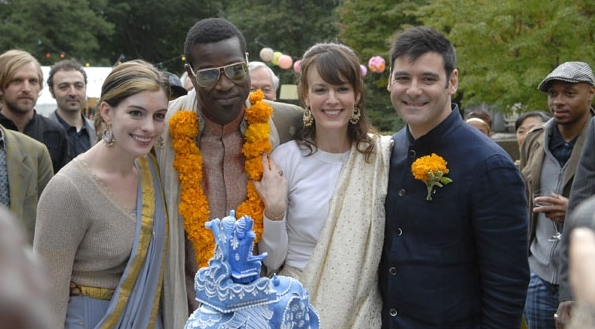
FEEL THE JOY: Kym (Anne Hathaway), Sidney (Tunde Adebimpe), Rachel (Rosemarie DeWitt) and Kieran (Mather Zickel) pose for a wedding photo in the film Rachel Getting Married. Image: Sony Pictures Classics.

Although not the title character of the film, Anne Hathaway's self-loathing Kym quickly becomes the central character with her uncontrolled outbursts and constant attention-seeking antics.
In one of her more serious acting choices, Anne Hathaway leaves behind her 'tiara' roles (The Princess Diaries and Ella Enchanted) and gives plenty of depth and substance to create a character both pitied and hated. Kym is a challenge to play and Hathaway has done a phenomenal task making the character believable and sometimes empathetic. It's a performance worthy of Hathaway's Academy Award nomination and a win would be fitting. However, she finally won an Oscar for Best Supporting Actress as Fantine in the star-studded musical film adaptation Les Miserables.

Missing out on an Oscar nomination for Best Supporting Actress for her role in this film, Rosemarie DeWitt is superb as the saintly and responsible sister Rachel, who continues to harbour deep hatred for her younger sister Kym whom she blames for a family tragedy. Rachel and Kym's relationship is strained yet Rachel makes an effort to forgive.

Veteran actress Debra Winger (Terms of Endearment, An Officer and a Gentleman) gives an excellent portrayal of the sisters' cold, distant and unforgiving mother, Abby.
Winger adds layers to Abby and gives a subtle and understated performance, with the 'bitch slap' scene between her and Hathaway bringing an emotional shock to the system for both characters.

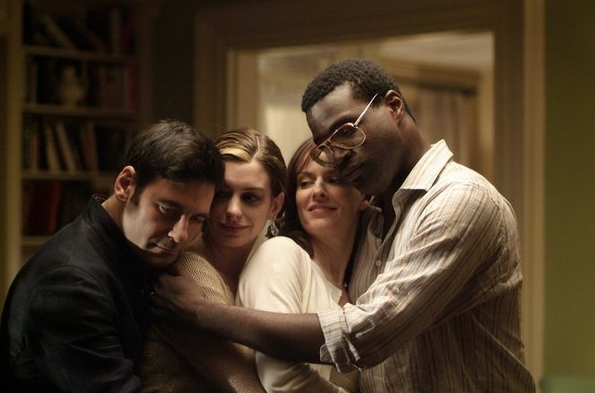
FEEL THE LOVE: Kieran (Mather Zickel), Kym (Anne Hathaway), Rachel (Rosemarie DeWitt) and Sidney (Tunde Adebimpe) share a group hug in the film Rachel Getting Married. Image: Sony Pictures Classics.

The supporting cast of wedding guests, family and friends include some of director Jonathan Demme's closest friends, and former colleagues who add colour, laughter and fun to the proceedings.
Bill Irwin as the patriarch Paul is gentle and perservering through the family conflicts; Mather Zickel is excellent as the dashing best man Kieran; singer and musician Tunde Adebimpe plays the groom Sidney, who brings out the passion and love in Rachel and Anise George shines in her minor role as Rachel's childhood friend Emma, who reluctantly gives up her role as Maid of Honour for the undeserving Kym.

Rachel Getting Married is a strong character-driven drama which provides heart-warming moments as well as heart-wrenching ones and is a film that makes you feel for and care about the main characters. Though they may irritate, surprise or amuse you, most of the characters leave a long lasting impression.

FEEL THE TENSION: Abby (Debra Winger), Rachel (Rosemarie DeWitt) and Kym (Anne Hathaway) experience a strained mother-daughter relationship in the film Rachel Getting Married. Image: Sony Pictures Classics.

Director: Jonathan Demme 

Writer: Jenny Lumet (screenplay)

Cast: Anne Hathaway, Rosemarie DeWitt, Mather Zickel, Bill Irwin, Anna Deavere Smith, Anisa George, Tunde Adebimpe, Debra Winger
  
Producers: Jonathan Demme, Neda Armian, Carol Cuddy, Elizabeth Hayes, Ilona Herzberg, Marc E. Platt, Innbo Shim, Jared Yeater, H. H. Cooper, Emily Woodburne, Alyssa St. Vincent
 
Original Music Composer: Donald Harrison Jr., Zafer Tawil   
 
Cinematographer: Declan Quinn (Director of Photography)
 
Film Editor: Tim Squyres   

Production: Ford Wheeler (Production Designer), Kim Jennings (Art Director), Chryss Hionis (Set Decorator)

Costume Designer: Susan Lyall

Running Time: 1 hour and 50 minutes

Milk (2008); biographical drama film review

Poster artwork for the biographical drama film Milk.
Harvey’s Hope by Linh


Milk is a rousing biographical drama which traces the last eight years of gay rights activist and San Francisco Supervisor, Harvey Milk’s life, from age forty to forty eight.
Harvey Milk made history by becoming the first openly gay man to be publicly elected to the San Francisco Board of Supervisors in 1977. Milk’s willingness to listen to his opponents and work with them, along with an eccentricity that made him stand out from the crowd, helped to bring admiration and widespread support for his causes.

The film opens with scenes of violent bashings and arrests of gay men in the 1960s and 1970s, and with a smooth transition that brings the action to the present which shows Harvey Milk speaking into a tape recorder about a possible assassination attempt on his life. He records his speeches and recalls events that have brought him to the position of San Francisco Supervisor.

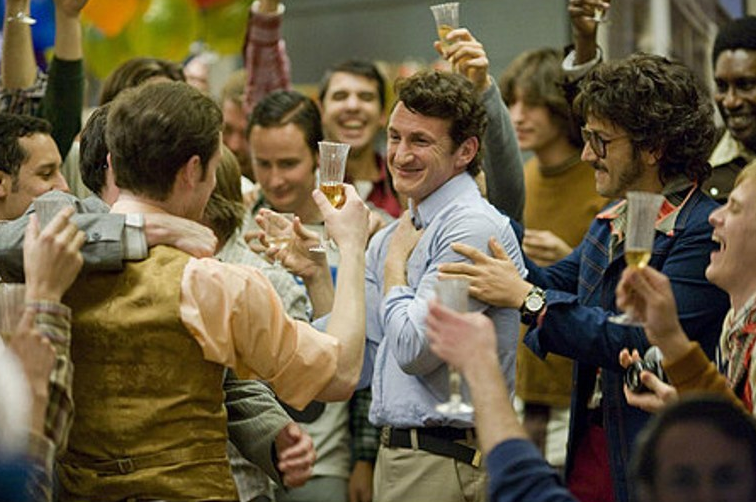
SUPPORT: Harvey Milk (Sean Penn) surrounds himself with friends and admirers in the film Milk. Image: Focus Features.

Gus Van Sant’s direction gives more than just a stirring portrait of a freedom fighter and unifier, but also depicts the impact of Milk’s determination to instigate change to improve the lives of the gay community, senior citizens, union workers and other minorities.

Gus Van Sant wanted to keep the film historically accurate and true to the actual events, so he chose to film Milk on location in San Francisco such as along Castro Street, where Harvey Milk and his lover Scott Smith opened their photographic store (Castro Cameras), and inside San Francisco’s Federal Building where scenes in the offices and City Hall were filmed.
He cleverly interweaves live action with archival footage giving the film a pleasing authenticity, with the use of 16mm film to make the archive footage almost indistinguishable from the filmed scenes.

FRIENDLY FOE: Dan White (Josh Brolin) discusses a deal with Harvey Milk (Sean Penn) in the film Milk. Image: Focus Features.

The cast is extraordinarily wonderful with brilliant performances throughout. Sean Penn plays Harvey Milk with some prosthetics to his nose and fake teeth. Penn is a walking, talking and living image of Harvey Milk, who manages to capture all the quirks and generous spirit that made Harvey the unexpected champion of gay rights and equality.

James Franco portrays Harvey’s lover and fellow gay rights activist Scott Smith, who continued to love and support Harvey even after the pair broke up.
Franco gives a strong performance and shows his versatility in film roles, from the stoner film Pineapple Express to the mystery drama In The Valley of Elah.

Josh Brolin is a very strait-laced and ambiguous Dan White, who befriends Harvey Milk when they are elected together on the Board of Supervisors.
Harvey Milk sees Dan as a friend who can help him pass legislation to protect gay rights but Dan has similar but sinister reasons to be Harvey’s ally. Even Harvey’s successful bid to use dog poo to help pass his gay rights laws barely brought a smile to Dan’s face.

FORMER LOVER: Scott Smith (James Franco) gives his support to Harvey Milk (Sean Penn) in the film Milk. Image: Focus Features.

The supporting cast comprises mainly of Harvey Milk’s friends, staff and lovers, who all provided sterling support.

Emile Hirsch is bright and rebellious as the street-punk-turned-activist, Cleve Jones; Alison Pill is superb as Harvey Milk’s quick-witted and fast-working campaign manager, Anne Kronenberg; Diego Luna is impressive as Harvey’s clingy, needy and manipulative lover Jack Lira; and High School Musical star Lucas Grabeel is excellent as Danny Nicoletta, the campaign photographer for Harvey Milk.

An interesting aspect of Milk is how so many people who either opposed or supported Proposition 6, (a proposal which makes it possible to sack gay teachers and anyone who supports them) are not portrayed by actors. They are shown only in archival footage used as part of Gus Van Sant’s direction of blending and morphing the reality of the past into the reality of the film’s present.
People such as the right wing Anita Bryant who was prominent in campaigning against homosexuality and preventing gay equality, former US President Ronald Reagan, American news broadcasters Walter Cronkite and Tom Brokaw all appeared as themselves throughout the film, but only in archival footage.
The 1970s hairstyles, fashion and music are accurately depicted, with an eclectic mix of opera arias, classical instrumentals, soul and rock music featured in the film.

RALLY: Cleve Jones (Emile Hirsch) drums up support for Harvey Milk's election to the Board of Supervisors in the film Milk. Image: Focus Features.

Milk is an uplifting and engaging independent biopic film on one of the most enigmatic individuals whose passion for gay rights still resonates in the hearts and minds of those who continue to have hope for sexual equality.

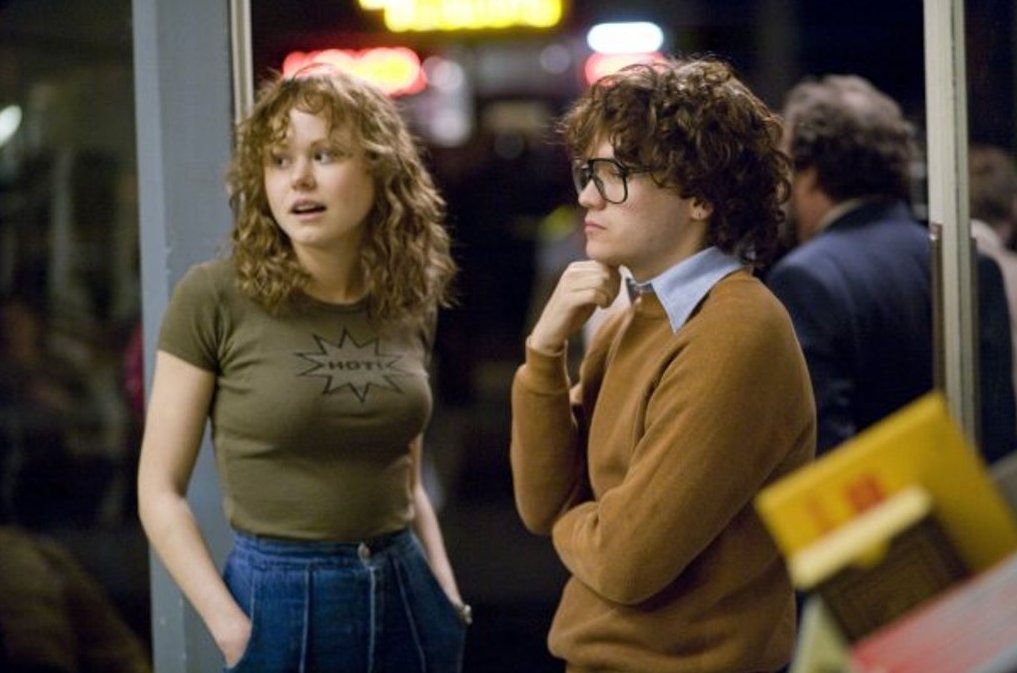
CAMPAIGNING: Anne Kronenberg (Alison Pill) and Cleve Jones (Emile Hirsch) work to stop Proposition 6 in the film Milk. Image: Focus Features.

Director: Gus Van Sant

Writer: Dustin Lance Black

Cast: Sean Penn, James Franco, Josh Brolin, Emile Hirsch, Diego Luna, Alison Pill, Victor Garber, Lucas Grabeel, Denis O’Hare, Kelvin Yu

Producers: Dustin Lance Black, Bruce Cohen, Barbara A. Hall, William Horberg, Dan Jinks, Michael London, Bruna Papandrea

Original Music Composer: Danny Elfman

Cinematographer: Harris Savides (Director of Photography)

Film Editor: Elliot Graham

Production: Bill Groom (Production Designer), Charley Beal (Art Director), Barbara Munch (Set Decorator)

Costume Designer: Danny Glicker

Running Time: 2 hours 8 minutes.