Monday, 10 February 2014

Dallas Buyers Club (2013); biographical drama film review


Poster artwork for the biographical drama film Dallas Buyers Club.
 Death-Delaying Drugs by Linh

The biographical drama film Dallas Buyers Club is inspired by true events and loosely based on the years following Texan electrician Ronald Woodroof being diagnosed with HIV in 1986. Woodroof died in 1992 and the film focusses on the last several years of his life being spent researching, smuggling and selling non-approved and illegal drugs used to treat HIV-positive and AIDS patients. Woodroff set up a buyers’ club in Dallas, where he sold various life-prolonging but unapproved drugs to cash-paying members. Other buyer’s clubs were already in existence at the time, but Woodroff’s Dallas buyers’ club frequently ignored warnings from pharmaceutical companies and the US FDA (Food and Drug Administration) on the dangerous side effects of some of the drugs. According to Woodroof, he was battling for survival and ”if it is out there, if I can get my hands on it, if I can buy, bribe, steal or whatever, I will go for it” (Minutaglio 1992).


COWBOY CRUSADER: Ron Woodroof (Matthew McConaughey) attempts to sell his non-approved HIV/AIDS drugs on the streets in the drama film Dallas Buyers Club. Image: Pinnacle Films, Focus Features.

The film is a fictionalised dramatisation drawn from Woodroff’s battle against the FDA to acquire non-approved drugs used to treat himself and other HIV and AIDS patients. The film uses an article featuring Woodroff as a basis for the story, but departs from the original story to include the characters of Dr. Eve Saks and Rayon; and Ron’s sleazy and carefree lifestyle of excessive drug taking, frequent unprotected sex and nightly visits to brothels, nightclubs and bars.

Dallas Buyers Club took twenty years to produce, but was filmed over twenty-five days in Louisiana in 2012 with a small budget of five million dollars. There are many scenes and characters created using artistic license while other aspects of the film reflect true events, such as Woodroof creating and operating a buyers’ club in Dallas, travelling worldwide to seek unapproved medicines, the desperate smuggling of those medicines into the USA, and Woodroof’s lawsuit against the FDA.


COMPASSIONATE CONCERNS: Dr. Eve Saks (Jennifer Garner) has doubts about human trials for a non-approved drug in the drama film Dallas Buyers Club. Image: Pinnacle Films, Focus Features.

The film opens in 1985 with Ron Woodroof (Matthew McConaughey) engaging in sexual intercourse with a woman inside a horse stall at the rodeo, while he watches a rider being kicked down by a bucking bull. Later, Ron places bets for punters at the rodeo but he loses all their money and runs off. Luckily, Ron encounters his police friend Tucker (Steve Zahn), who pretends to arrest him then gives him a ride home. After a wild night of cocaine-snorting, drinking, sex, and a violent confrontation, Ron is late for work the next day. At work, a co-worker has an accident and Ron tries to shut off the electricity but is electrocuted. He wakes up in Dallas Mercy Hospital where Dr. Sevard (Denis O’Hare) and Dr. Eve Saks (Jennifer Garner) inform him he is HIV positive. At the suggestion that he may have had homosexual intercourse, Ron reveals his homophobic nature but is dumbstruck to hear he has thirty days to live. After the initial shock, Ron vows to fight his HIV and live for as long as he could by any means possible.

In a desperate attempt to prolong his life, Ron bribes a hospital orderly (Ian Cassleberry) for the drug AZT, an antiviral which was still being tested in human trials at the time. Unfortunately, Ron’s cocaine-snorting while taking AZT sends him back to hospital. Ron meets Rayon (Jared Leto), a transgender who is also HIV positive and is part of the AZT trials. Despite Ron’s homophobia, he develops a friendship with Rayon after she uses her connections to help him sell unapproved HIV/AIDS drugs to the LGBT community on the streets and at the Dallas buyers’ club. The FDA soon hears of Ron’s buyers’ club flouting the law by continuing to sell non-approved drugs such as compound Q, DDC and the protein Peptide T, so raids are carried out to confiscate non-approved drugs on the premises. Ron launches legal action against the FDA and continues operating his buyers’ club.


PHARMACEUTICAL PURVEYORS: Mr Yamata (Scott Takeda) and Ron Woodroof (Matthew McConaughey) discuss availability of non-approved AIDS treatment in the drama film Dallas Buyers Club. Image: Pinnacle Films, Focus Features.

Dallas Buyers Club is a small independent film that contains nudity, sex scenes, drug use and strong language, which had a limited release in most countries. The film’s casting originally had Brad Pitt or Ryan Gosling in the role of Ron Woodroof and Hilary Swank as Dr. Eve Saks, with Craig Gillespie rumoured to be directing. However, the eventual cast is excellent and the performances were compelling and ripe for awards season.

Matthew McConaughey (Mud, The Wolf of Wall Street) has been a rom-com (romantic comedy) stalwart for many years, and his move into serious dramatic roles in films in recent years proves to be worth the wait. McConaughey shed over twenty kilograms for the role of Ron Woodroof, and his gaunt and slender frame looked very similar to an AIDS patient. He gives a charismatic and crowd-pleasing performance as the homophobic, hustling and foul-mouthed Ron, a crusader for the fight against AIDS and HIV.

Jared Leto (Requiem For A Dream, Fight Club) spends most of his time these days as lead singer and songwriter for his band 30 Seconds To Mars, but he remains an accomplished actor. His portrayal as the transgender Rayon adds to his list of quirky and complex characters that excite, frustrate and are awe-inspiring. Leto also lost weight for his role in Dallas Buyers Club, and is barely recognisable in his role as the fun-loving, gorgeously dressed Rayon.

Jennifer Garner (Draft Day, Imagine) is convincingly practical, smart and compliant as Dr. Eve Saks and she shows compassion towards her patients. Dr. Eve Saks represents doctors and practitioners in the medical establishment who are cautious and concerned about the horrible side effects of drugs being tested for HIV and AIDS research. As Eve reads further literature regarding the non-approved drugs, she begins to understand that some risks are worth taking to save lives.


PECULIAR PARTNERSHIP: Rayon (Jared Leto) agrees to assist Ron Woodroof (Matthew McConaughey) in selling non-approved AIDS drugs to save lives in the drama film Dallas Buyers Club. Image: Pinnacle Films, Focus Features.

Dallas Buyers Club is a wild ride alongside a Texan cowboy whose life journey changes direction when HIV and AIDS become his reality. The film provides a small insight into the early period of the AIDS epidemic from the patients’ perspective and from the viewpoint of the pharmaceutical and FDA administrators in approving AIDS/HIV drugs. The film attempts to realistically depict a generalised fear of AIDS during the 1980s in conservative America by linking it to homosexual intercourse, instead of the research and facts of contracting and preventing AIDS. However, the film’s supporting characters are well utilised to depict the ignorance and fear regarding the issues of AIDS in areas such as unprotected sex, sexuality, and medical establishments working with government agencies to potentially exploit AIDS/HIV patients by charging exorbitant prices for treatment.

Director: Jean-Marc Vallée

Writers: Craig Borten (screenplay), Melisa Wallack (screenplay), Bill Minutaglio (original article)

Cast: Matthew McConaughey, Jennifer Garner, Jared Leto, Denis O’Hare, Steve Zahn, Michael O’Neill, Deneen Tyler, Donna Duplantier, Kevin Rankin, Griffin Dunne, Ian Casselberry, Don Brady, John Tabler, Jane McNeill, Joji Yoshida, Scott Takeda, Tony Bentley, Dallas Roberts, J.D. Evermore, Sean Boyd, Matthew Thompson, James DuMont, Lawrence Turner, Noelle Wilcox, Lucius Falick, Bradford Cox, Carl Palmer, Craig Borten

Producers: Holly Wiersma, Nathan Ross, Cassian Elwes, Nicolas Chartier, Tony Notargiacomo, Logan Levy, David L. Bushell, Zev Foreman, Joe Newcomb, Rachel Winter, Robbie Brenner, Parry Creedon, Michael Sledd

Cinematographer: Yves Bélanger  (Director of Photography)

Film Editors: Martin Pensa, Jean-Marc Vallée

Production: John Paino (Production Designer), Javiera Varas (Art Director), Robert Covelman (Set Decorator)

Costume Designer: Kurt and Bart

Running Time: 2 hours

Reference:


Minutaglio, Bill (1992). Buying Time: World Traveller Ron Woodroof Smuggles Drugs - and Hope - For People With AIDS. Dallas Life Magazine, 9 August 1992.
Accessed on 10 February 2014


Monday, 3 February 2014

Frozen (2013); animated musical film review


British poster artwork for the animated musical film Frozen.
Snow Sisters by Linh

Disney studios’ animated musical film Frozen is loosely based on Hans Christian Andersen’s fairy tale The Snow Queen, with music and songs composed by husband-and-wife team Robert Lopez and Kristen Anderson-Lopez. The song ‘Let It Go’, sung by Idina Menzel who voices Elsa in the film, has received numerous accolades, and is one of the highlights depicting a crucial turning point for the character Elsa. In this film, there are the usual elements of princesses, princes, magical powers and funny characters for comic relief. There are also differences, compared to the predictable Disney princess films in the past, such as two female lead characters with male characters in supporting roles, more mature themes and messages, and no happily-ever-after wedding. Just like Disney’s hybrid animated-live action musical film Enchanted, Frozen takes on the traditional roles and expectations of women and men by appropriating them for the twenty-first century.

ADVENTUROUS ANNA: Anna (Kristen Bell) is the lively and extroverted of the sisters in Arendelle in the animated musical film Frozen. Image: Walt Disney Pictures.
The film begins on a cold winter evening, when a very young boy, Kristoff, and his pet baby reindeer named Sven, join a group of men gathering blocks of ice from a fjord to sell. Later that night in the kingdom of Arendelle, a five-year old princess named Anna, pronounced Ahna, (Livvy Stubenrauch, Katie Lopez) wakes her eight-year old sister, princess Elsa (Eva Bella), so they can play using Elsa’s magic. Elsa’s magic enables her to create snow and ice at will, using her hands and imagination. She was born with these mysterious powers and each day, her magic grows stronger. When Elsa agrees to play with Anna, they build a snowman, which they name Olaf “who likes warm hugs”, and Elsa turns the ballroom into a winter wonderland. As they play, Anna urges Elsa to work her magic faster. Elsa is unable to keep up with Anna’s quick movements, and she accidentally hits Anna on the head with her magic. As Anna lies unconscious on the floor, a white streak appears in her hair. Elsa is distraught and the King (Maurice LaMarche) and Queen (Jennifer Lee) take Anna to be cured by trolls, who take away all of Anna’s memories about Elsa’s magical abilities. The King and Queen tell Elsa to never use her magic and must repress all her magic to ensure she never hurts anyone again.

Ten years later, the King and Queen die at sea during a violent storm, which capsizes their ship. Their deaths leave Anna (Agatha Lee Monn) lonelier as Elsa (Spencer Lacey Ganus) continues to isolate herself by staying inside her bedroom, never coming out in case her magic hurts someone. Three years pass, and twenty-one year old Elsa (Idina Menzel) is to be crowned at her coronation ceremony as Queen of Arendelle, and Anna (Kristen Bell) is excited that the palace gates will finally be open after many years. At this stage, Elsa’s magic has become very powerful that it takes her plenty of energy and mental fortitude to control it. That same day, Anna meets Prince Hans (Santino Fontana) and they instantly fall in love and decide to get married. Elsa disapproves of Anna marrying someone whom she met only a few hours ago, which upsets Anna. As Anna and Elsa argue, Elsa’s powers erupt and this frightens the guests and palace staff, who begin to think she is a monster and witch. She flees Arendelle and unknowingly turns the summer into winter, with fjords freezing into solid ice, snow falling consistently and a blizzard on the way. Anna goes searching for Elsa, leaving Hans in charge. On her journey, Anna encounters Kristoff the iceman (Jonathan Groff), who sells ice for a living, and his reindeer friend Sven; the snowman from her childhood named Olaf (Josh Gad); and a jolly community of trolls whom Kristoff calls the love experts and his adoptive family.

MARRIAGE MOTIVES: Prince Hans (Santino Fontana) of the Southern Isles seeks a bride and he chooses Princess Anna (Kristen Bell) in the animated musical film Frozen. Image: Walt Disney Pictures.
The voice cast of Frozen is excellent and the songs are delightful and humourous, particularly Olaf’s song ‘In Summer’ and the trolls’ ensemble song ‘Fixer Upper’. Idina Menzel appeared as a live action and an animated character in Enchanted, and she is wonderful in Frozen as Queen Elsa; Kristen Bell is not known for her singing, but her singing voice is gorgeous as the tomboy princess Anna; Josh Gad is hilarious and endearing as Olaf the snowman; Jonathan Groff is affable as Kristoff the iceman, with a sound voice of reason and kind heart; Santino Fontana is wonderfully suave as Prince Hans, whose motives of marrying Anna are questionable.


MAGICAL MANOEUVRES: Queen Elsa (Idina Menzel) flees Arendelle and builds an ice castle with her magic as she sings the song 'Let It Go' in the animated musical film Frozen. Image: Walt Disney Pictures.
The events in the film happen quickly, however, this is supported by repetition in the sense that childhood elements are revisited and characters return. For example, the snowman Olaf, which the princesses built when they were younger; and the return of Kristoff, Sven and the trolls. Even though the film’s colour palette for the backgrounds are mostly white, grey or pale blue, there is plenty to marvel at onscreen. For example, the ice crystals forming on the trees and leaves, the sparkling effect of the ice in the daytime and the aurora borealis or northern lights in the night sky.

The characterisations in Disney animated films are becoming more complex and interesting as the writers and animators make the characters believable and memorable. Cynically speaking, this is an obvious marketing ploy to attract younger viewers to the characters so they will urge parents to buy various merchandise related to the film. In relation to the film’s success and appeal, these characters embody genuine human afflictions and tackle issues that contemporary audiences can relate to and empathise with, despite being set in a fictional world. 

SUMMER SNOW: Olaf the snowman (Josh Gad) has never experienced summer or heat before so he imagines what summer is like as he sings 'In Summer' in the animated musical film Frozen. Image: Walt Disney Pictures.
As with many Disney animated films, the messages are for young viewers to contemplate but these days, adult viewers can re-discover the joys of Disney films as the messages and themes also appeal to adults. In Frozen, there are two prominent messages, one for each sister, with themes of family, friendship and trust. These themes are linked to the messages of love and self-sacrifice, in which Elsa must overcome her fear (of being hurt by others and hurting others) by learning to love again; and Anna must learn that an act of true love is not only for oneself, but also for others as an act of self-sacrifice.

Frozen can be viewed as depicting feminist ideals through the two lead female characters, but also showing traditional family values associated with women. This does not make the male characters less important, but gives males a different perspective of masculinity in a supportive manner to assist women. In similar ways to Enchanted and Tangled, this film is another example from Disney that reflects the changing attitudes and expectations for the status of women and men in contemporary societies. 

MONSTER MARSHMALLOW: In a moment of fear when she was under attack, Elsa created a giant snow monster to protect her in the animated musical film Frozen. Image: Walt Disney Pictures.
Viewers who stay seated for the end credits of Frozen, are rewarded with a 15-second short featuring Elsa's giant snow monster whom Olaf named Marshmallow; and a funny disclaimer in the end credits about Kristoff's views and opinions that "all men pick their nose then eat their booger" which does not reflect those of the film-makers.


Directors: Chris Buck, Jennifer Lee

Writers: Hans Christian Andersen (original story The Snow Queen), Jennifer Lee (screenplay and story), Chris Buck (story), Shane Morris (story)

Voice Cast: Idina Menzel, Kristen Bell, Jonathan Groff, Josh Gad, Santino Fontana, Alan Tudyk, Ciarán Hinds, Chris Williams, Marice LaMarche, Jennifer Lee, Maia Wilson, Livvy Stubenrauch, Katie Lopez, Agatha Lee Monn, Spencer Lacey Ganus), Eva Bella, Edie McClurg, Robert Pine, Stephen J. Anderson, Nicholas Guest, Jean Gilpin

Producers: John Lasseter, Aimee Scribner, Peter Del Vecho

Original Music Composers: Christophe Beck (score), Robert Lopez (song lyrics and music), Kristen Anderson-Lopez (song lyrics and music)

Film Editor: Jeff Draheim

Production: Michael Giaimo (Art Director), David Womersley (Production Designer)

Running Time: 1 hour and 40 minutes

Wednesday, 29 January 2014

Get A Horse! (2013); animated short film review


Poster artwork for the animated short film Get A Horse!
Mixed-Media Mickey by Linh

Walt Disney Studios continues with their tradition of preceding animated feature films with an original animated short film. Get A Horse! screens ahead of the animated musical film Frozen, and it is a mixed-media treat for the 21st century generation of children and for adults who recall seeing the original cartoons in the 1930s to 1950s.

Get A Horse! is a 6-minute film that pays cinematic homage to the original Mickey Mouse films of the period from 1928 to 1935, when 7 or 8 minute black and white short films that were called cartoons at the time, featured Mickey Mouse, Minnie Mouse and Peg-leg Pete. Additional characters such as Clarabelle Cow and Horace Horsecollar were added to the cast of characters in 1929. Later in 1935, the Mickey Mouse cartoons were produced in technicolour and screened regularly in theatres until 1953. Walt Disney Studios produced one-off shorts in colour between 1983 and 2013.

GENTLEMANLY GESTURE: Mickey Mouse invites his girlfriend Minnie Mouse to join him on a haywagon ride in the animated short film Get A Horse! Image: Walt Disney Animated Studios.
In Get A Horse!, Mickey hitches a haywagon ride from his friend Horace Horsecollar and they pick up Minnie Mouse and Clarabelle Cow along the way. Soon after, Peg-leg Pete appears close behind the haywagon driving his old car and toots his car horn that bellows,“ Make way for the future!” Pete begins to ogle Minnie but Mickey uses Clarabelle to block Pete’s view of Minnie. Pete becomes annoyed at Mickey, so he rams his car into the back of the haywagon, tossing Mickey and Horace towards the cinema screen. Pete then tosses Mickey and Horace harder, so the pair break through the screen and land in the coloured real world. Pete seals up the hole in the screen and continues taunting Mickey and Horace while he has Minnie in his grasp.

The rest of the short film is a brilliant blend of slapstick comedy, transitioning from black and white to colour cinema, and using modern day colour film technology to reach into the black and white past of film-making. For example, after they are tossed into the real world, Mickey uses Horace’s smartphone to assist in pulling a funny prank on Pete. Archive audio featuring the original voices of the actors, are also used in the film alongside the voices of the modern day actors. This short film requires viewers to suspend their disbelief in order to believe the impossible and enjoy the pairing of black and white with colour, and old film-making techniques with new cinema technology.

HAYWAGON HUMOUR: Peg-leg Pete is angry at Mickey Mouse for disrupting his sexual gaze of Minnie Mouse in the animated short film Get A Horse! Image: Walt Disney Animation Studios.
The short film features a small cameo from Oswald the Lucky Rabbit, who looks like Mickey Mouse with rabbit ears, a character Disney co-created. Oswald featured in Disney cartoons from the 1920s to 1930s. Disney lost the rights to Oswald after “refusing to take a twenty percent pay cut from film producer Charles Mintz” (Tallarico 2014). Disney also lost most of his animation staff to Mintz. In 2006, the Walt Disney company secured the intellectual property rights of Oswald, and the rabbit with personality and humour began appearing in Disney’s video games from 2012 onwards.

Get A Horse! is directed by Lauren MacMullan (Wreck-It Ralph, The Simpsons Movie), who is the first woman to solely direct a film from Walt Disney Animation Studios. This is a triumph of sorts as Walt Disney was a misogynist, according to those who worked closely with him. While presenting an award to Emma Thompson at the National Board of Review awards ceremony on 7 January 2014, Meryl Streep called Disney a gender bigot and racist, then “quoted Disney animator Ward Kimball who said: ‘He didn’t trust women or cats’. Streep then read a letter Disney wrote, and quoted his words spoken to a female job applicant: ‘Women do not do any of the creative work in connection with preparing cartoons for the screen, as that task is performed entirely by young men. For this reason, girls are not considered for the training school’ " (Appelo 2014).  Disney may not have had much confidence in women’s creative talents but he trusted their opinions. In 1959, he wrote: “Women are the best judges of anything we turn out. Their taste is very important. They are the theatre-goers, they are the ones who drag the men in. If the women like it, to heck with the men” (Appelo 2014). 

Get A Horse! is a charming and enjoyable short film that introduces some of Disney’s earliest animated characters and some lesser-known ones. The animated violence in this film is humourous for adults but may unsettle younger children.

PLAYFUL PRANK: In the real world, Mickey Mouse and Horace Horsecollar play a phone prank on Peg-leg Pete who has captured Minnie Mouse in the cartoon world in the animated short film Get A Horse! Image: Walt Disney Animation Studios.

Director: Lauren MacMullan

Writers: Lauren MacMullan (story), Nancy Kruse (story), Raymond S. Persi, Paul Briggs (story)

Voice Cast: Walt Disney (archive sound), Russi Taylor, Will Ryan, Marcellite Garner (archive sound), Billy Bletcher (archive sound), Bob Bergen, Terri Douglas, Mona Marshall,  Jess Harnell, Paul Briggs

Producers: John Lasseter, Dorothy McKim, Michele Mazzano

Original Music Composer: Mark Watters

Film Editor: Julie Rogers

Running Time: 6 minutes


References:

Appelo, Tim (2014). Was Meryl Streep Correct in Calling Walt Disney a “Bigot”? The Hollywood Reporter. 9 January 2014.
Accessed on 29 January 2014.

Tallarico, Tony J. (2014). Oswald the Lucky Rabbit: Mickey’s Predecessor. This Day in Disney History.
Accessed on 29 January 2014.

Thursday, 16 January 2014

The Book Thief (2013); drama film review


Spanish poster artwork for the drama film The Book Thief.

Liberating Literature by Linh

The Book Thief is a film adaptation of the Markus Zusak book of the same name, and is quite faithful to the original novel. The film closely mirrors the book’s themes, emotive pull and narrative style, particularly with Death as narrator throughout the film. The story may appear grim at the beginning with Death narrating, yet it appears apt as the film is set during World War II in Nazi Germany with death as a recurring theme. However, the slight difference is the book does not immediately name the narrator as Death, thereby giving the reader opportunities to determine the identity of the narrator based on the narrator’s observations. The film’s opening scene is ambiguous at first, giving the impression that an angel or God is narrating due to overhead scenes of sky and clouds being shown. Within several seconds, the viewer understands it is neither of them.

COMPETITIVE COMPANIONS: Liesel (Sophie Nélisse) finds a true friend in Rudy Steiner (Nico Liersch) in the drama film The Book Thief. Image: Twentieth Century Fox.
The film begins with Death introducing the story and the focus is on the early life of a young German girl named Liesel Meminger (Sophie Nélisse) on a train with her mother (Heike Makatsch) and younger brother (Julian Lehmann). Her brother dies during the train ride and is buried soon after. At her brother’s funeral, the grave digger (Gotthard Lange) drops a book, which Liesel picks up and keeps with her. Liesel’s mother then sends her away for adoption and mysteriously disappears. Liesel’s foster parents are Hans Hubermann (Geoffrey Rush) and his wife Rosa (Emily Watson), who are very poor. Hans discovers Liesel is illiterate and helps her learn to read and write using the basement walls as a giant dictionary for Liesel to write the words she just learnt. The first book Hans teaches Liesel to read is the one she picked up at her brother’s funeral – The Grave Digger’s Handbook.

One of the locals in Liesel’s neighbourhood is a German boy named Rudy Steiner (Nico Liersch) who loves playing soccer and running. He immediately likes Liesel and becomes one of her closest and dearest friends in the film. As the Nazis continue arresting Jews, Hans takes in Max (Ben Schnetzer), a young Jewish man whose father saved Hans’s life in World War I. Liesel and Max become friends as she reads to him in the basement amid the growing danger he faces if the Nazis find him. As World War II intensifies and many more people die, Liesel finds courage, enlightenment and hope in the words found in books.

SHARING STORIES: Liesel (Sophie Nélisse) keeps Max (Ben Schnetzer) company in the basement with books and conversation in the drama film The Book Thief. Image: Twentieth Century Fox.

The Book Thief depicts a balance of cruelty and inhumanity in some scenes and kindness and generosity in others. An example is the archival footage of Jesse Owens winning gold medals at the 1936 summer Olympics in Germany, which may have been included to show Hitler’s chagrin, while being an inspiration for Rudy Steiner to become a faster runner and make Owens his role model for athleticism. The film shows the growing power of Hitler’s influence during the 1930s and1940s, such as the choir of young children singing the German anthem with Nazi flags and swastikas prominently displayed; the book burning scene; Nazi soldiers smashing and destroying property belonging to Jews then beating them in public before arresting them for persecution. These scenes are contrasted with kindness by Hans and Rosa in helping to hide Max from the Nazis thus risking their own lives if Max is captured; Ilsa Hermann forgives Liesel for stealing her books and then lets Liesel read them in the library with her; Hans, Rosa, Liesel and Max having a snowball fight then building a snowman in the basement for Christmas.

BOOK BORROWER: Liesel (Sophie Nélisse) sneaks into the private library of Ilsa Hermann in the drama film The Book Thief. Image: Twentieth Century Fox.
The cast, that includes Australian, British, German and Canadian actors, is excellent, the performances are compelling and the filming in Germany brings an authentic feel to the time when the terrible events occurred. The use of some German words such as ja/yes, und/and, nein/no or dummkopf/stupid person among the English spoken words may seem awkward at first, but viewers will gradually become accustomed to it and understand it adds a sense of authenticity to the setting, people and time of the film’s events.

Sophie Nélisse (Monsieur Lazhar, Pawn Sacrifice) is captivating as Liesel, the protagonist in the film who finds books are a source of comfort and inspiration. Nélisse is convincing as her character discovers how friendships with Hans, Rudy, Max and Ilsa Hermann (Barbara Auer) help her to understand the importance of using words to stimulate good or evil. Liesel feels robbed of so many loved ones in her life that she tells herself “When life robs you, sometimes you have to rob it back.” However, Liesel uses words to maintain friendships, share in her joy of storytelling and to distract her from the oppressive horrors of the war. On the other hand, Hitler uses words to control a nation, influence the minds and hearts of citizens and to persecute.

The pairing of Geoffrey Rush (The Best Offer, Gods of Egypt) and Emily Watson (Molly Moon: The Incredible Hypnotist, Belle) as the Hubermanns is sheer delight, with a mix of nasty name-calling and gestures of love between this dynamic couple; the young Nico Liersch is brilliant as Liesel’s friend Rudy who secretly loves her and eventually gains her trust; Roger Allam (The Iron Lady,The Angels’ Share) is wickedly cynical yet comforting and kind-hearted as Death.

AIR RAID ANGUISH: Rudy (Nico Liersch), Liesel (Sophie Nélisse) and Rosa (Emily Watson) hide with others in a bomb shelter during an air raid in the drama film The Book Thief. Image: Twentieth Century Fox.
The film is beautifully scored by John Williams whose musical compositions have an emotive flow particularly during the traumatic events of Liesel’s life in Nazi Germany. The Book Thief is not a Holocaust film but it does deal with many elements of the human condition using the events of World War II as a backdrop and the characters as a means to link the power of words to do good and triumph over acts of evil and terror. The film has moments of poignancy and sadness, yet is uplifting and joyful, with enough to be on par with the book.

Director: Brian Percival

Writers: Markus Zusak (novel), Michael Petroni (screenplay)

Cast: Sophie Nélisse, Geoffrey Rush, Emily Watson, Nico Liersch, Kirsten Block, Rainer Reiners, Ben Schnetzer, Levin Liam, Barbara Auer, Rainer Bock, Roger Allam, Heike Makatsch, Julian Lehmann, Hildegard Schroedter, Oliver Stowkowski, Carina Wiese, Gotthard Lange

Producers: Redmond Morris, Karen Rosenfelt, Henning Molfenter, Charlie Woebcken, Christoph Fisser, Ken Blancato

Cinematographer: Florian Balhaus

Original Music Composer: John Williams

Film Editor: John Wilson

Production: Simon Elliott (Production Designer), Bill Crutcher (Art Director), Anja Müller (Art Director), Jens Löckmann (Art Director), Mark Rosinski (Set Decorator)

Costume Designer: Anna B. Sheppard

Languages: English and German with English subtitles

Running Time: 2 hours and 15 minutes


Saturday, 5 October 2013

Porky's Meatballs / Zany Campus 鬼馬校園 (1987); teenage romance comedy film review

DVD cover artwork for the teenage romance comedy film Porky's Meatballs/Zany Campus 鬼馬校園 (1987).

High School Highjinks by Linh

Porky's Meatballs may be considered to be Hong Kong cinema's equivalent to American teenage rom-coms (romantic comedy), similar to those written and directed by the late John Hughes. This film tackles themes of teenage romance, heartbreak, friendships, revenge, and an emphasis on the importance of a higher education.

However, unlike American teen movies like Porky's and its subsequent sequels, Porky's Meatballs does not depict the misogynistic, bawdy and outrageous sexcapades (sexual escapades) of teenage boys seeking to lose their virginity, perving on naked women through peep-holes in walls, and bedding prostitutes. Porky's Meatballs may have issues of sexuality, gender and social class which underpin the film's storylines but this film is quite cutesy in its sex humour and clever in its use of homonyms.

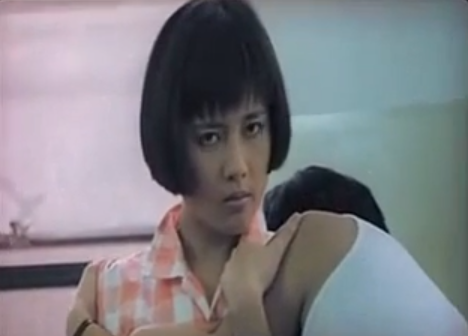
GECKO GAG: Chun (Rachel Lee Lai Chun) comforts Bak Yut Mong (Nnadia Chan Chung Ling) after a lizard revenge prank from their male classmates in the film Porky's Meatballs/Zany Campus 鬼馬校園 (1987). Image: D and B Films.

Set in 1987 Hong Kong, the film begins with the start of the final high school term at York Chi College, and the college superintendent's son Tse Tin (Stephen Ho Kai Nam) has flunked again and is now in the same class as his younger sister Tse Dai (Sabrina Ho Pui Yee). Twenty seven year old Ng Seng Choi (Yiu Yau Hung), who has been in the same grade for the last five years and deliberately flunks to make money by doing other students' homework for payment, gives his classmate Sung Kar Ming (Timothy Siu Chen Yung) a ride to school in his red convertible, while fellow classmate Bak Yut Mong (Nnadia Chan Chung Ling) waits for the bus. Bak Yut Mong notices a handsome young man staring at her from the balcony of a flat and she develops a crush on him. 

DAY DREAMER: Bak Yut Mong (Nnadia Chan Chung Ling) is a romantic who falls in love with a dummy in the film Porky's Meatballs/Zany Campus 鬼馬校園 (1987). Image: D and B Films.

Meanwhile, Chun (Rachel Lee Lai Chun), the most popular girl in school, is still on holidays in Hawaii and she meets university student Tai Wan Ho (Chan San Ho) who falls in love with her after one date together. When Chun returns to Hong Kong, he follows her and even enrols in the same class to be with her. Tse Tin grows jealous of Tai Wan Ho and plots with Ng Seng Choi to break up the pair, but he soon realises Chun is interested in her P.E. teacher (Russell Wong Seng Dat). After discovering the handsome man on the balcony is not "real", Bak Yut Mong is devastated and embarrassed, but does not realise Sung Kar Ming has a crush on her. 

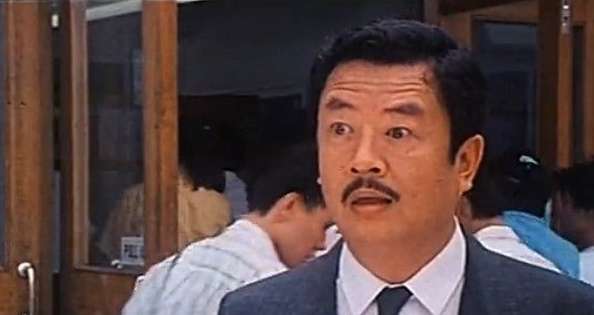
AMBIGUOUS AUTHORITY: Principal Wu (Teddy Yip Wing Cho) has ethical discrepancies and questionable morals but he cares about his students and their education in the film Porky's Meatballs/Zany Campus 鬼馬校園 (1987). Image: D and B Films.

The various crushes and romances are tested as a gender war between the students turn the basketball match between York Chi College and rival San Dong College into a riot. As a result, the college superintendent demotes Principal Wu (Teddy Yip Wing Cho) to student co-ordinator and hires a former army general (Guk Fung) and a team of top educators to discipline the students. The students respond to the conservative regime of their new Principal and teachers by pulling pranks, cheating on exams and plotting to get rid of them to bring back Principal Wu.

DEVIOUS DISGUISE: Ng Seng Choi (Yiu Yau Hung) and Tse Tin (Stephen Ho Kai Nam) at their Star Wars themed high school ball in the film Porky's Meatballs/Zany Campus 鬼馬校園 (1987). Image: D and B Films.

Porky's Meatballs is a light-hearted and fun teenage comedy romance with many cultural references to Hong Kong and American films, television series and celebrities. However, it is still accessible and comprehensible for non-Asian viewers as the themes are universal. The characters' names in the film are quite funny if using the literal Chinese translations; for example, Tse Tin is "thank heaven" while his younger sister Tse Dai is "thank earth", Ng Seng Choi is "never get rich" yet he makes so much money, and Bak Yut Mong is "day dream" which is what she does most of the time. The songs featured in the film are upbeat, breezy, pop rock numbers sung by upcoming artists at the time, Nnadia Chan Chung Ling and Chan San Ho, who also star in the film.

SWEET SEDUCTION: Tse Dai (Sabrina Ho Pui Yee) attempts to seduce a male student from a rival college for a revenge prank in the film Porky's Meatballs/Zany Campus 鬼馬校園 (1987). Image: D and B Films.

Director: Clifton Ko Chi Sum

Writers: Clifton Ko Chi Sum, Joe Ma Wai Ho

Cast: Nnadia Chan Chung Ling, Teddy Yip Wing Cho, Rachel Lee Lai Chun, Stephen Ho Kai Nam, Sabrina Ho Pui Yee, Guk Fung, Chan San Ho,Timothy Siu,Yiu Yau Hung, Lam Chung, Russell Wong Seng Dat, Law Kam Fai, Wong Hung, Cheung Yuen Wah, Chiao Chiao

Producers: Linda Kuk Mei Lai, Dickson Poon Kik Sun

Cinematographers: Ardy Lam Gok Wah, Derek Wan Man Kit


Music Composer: Richard Yuen Cheuk Fan

Film Editor: Cheung Kwok Kuen

Production Designer: Jason Mok Siu Kei

Language: Cantonese with English subtitles

Running Time: 1 hour and 37 minutes

Thursday, 18 July 2013

The Cherry On The Cake / La Cerise Sur Le Gâteau (2012); romance drama film review

French poster artwork for the romance drama film The Cherry On The Cake (La Cerise Sur Le Gâteau).

Fleeting Feelings by Linh

The Cherry On The Cake /La Cerise Sur Le Gâteau is actor/writer Laura Morante’s directorial debut and although it is advertised as a rom-com (romantic comedy), it actually seems like a parody of the typical American rom-com. This film has the best elements of a Woody Allen rom-com and similar wit and dialogue seen in Nora Ephron films. Morante has added a darker tone to the narrative in her rom-com that deals with psychoanalysis and gender relations in romantic relationships being central to the storyline. This makes the film appear to have more substance but the style remains typically of the rom-com genre.

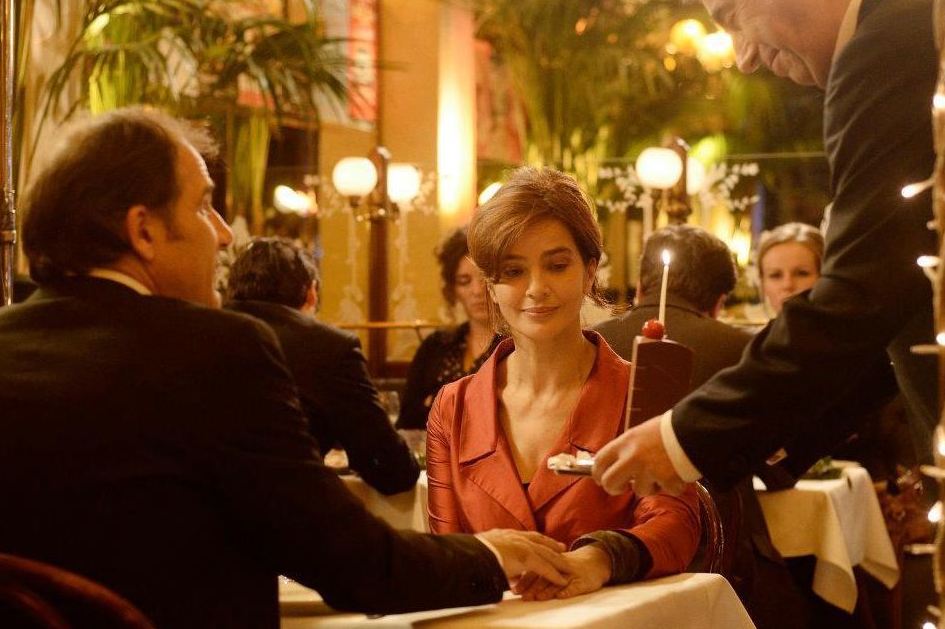
CHOICE CHERRY: Amanda (Laura Morante) wants the cherry on the cake but her partner Bertrand (Frédéric Pierrot) is also keen for the cherry in the film The Cherry On The Cake (La Cerise Sur Le Gâteau). Image: Nuts and Bolts Production.

Throughout the film, love never runs smoothly or ends happily for protagonist Amanda (Morante), who believes that she suffers from androphobia, which is a type of anxiety disorder and an irrational fear of men. This is not to be confused with misandry, the hatred of men, as Amanda appears to love men and be fond of all her former male lovers. Amanda has a tendency to end relationships whenever things become too comfortable and serious by finding the most inane and tiniest of reasons to dump her lover. She dumps her current partner Bertrand (Frédéric Pierrot) as they are celebrating their anniversary at a restaurant after he eats the only cherry on the cake without first offering it her. 

When her friend Florence (Isabelle Carré) hears of Amanda’s breakup, she suggests they go to a New Year’s Eve party her office colleagues are organising. Florence tells Amanda that all the men from her office are heterosexual except for one. At the office party, Amanda meets Antoine (Pascal Elbé) and is immediately attracted to him. Florence is thrilled until she realises Amanda is only comfortable with Antoine because she mistakenly believes he is gay. Florence and her husband Hubert (Patrice Thibaud), the psychoanalyst, devise a plan to exploit that misperception until Antoine, who has fallen for Amanda, becomes so important to her that he can reveal his love without fearing she’ll end their close friendship.

ANDROPHOBIC ACT: Amanda (Laura Morante) tells Florence (Isabelle Carré) about her break up with long-time partner Bertrand (Frédéric Pierrot) in the film The Cherry On The Cake (La Cerise Sur Le Gâteau). Image: Nuts and Bolts Production.

The film’s title is apt as it not only marks the reason for Amanda’s recent breakup, but the concept of a “cherry on top” indicates something wonderful coming after something that is already considered to be good. Antoine is likely to be the best lover Amanda will have in a long time, but her belief of his homosexuality makes him an innocuous “friend” so she feels comfortable being with him. However, Antoine can also feel safe in the fact that he does not have to tell Amanda the truth that he is heterosexual and still be romantically involved with her. This situation raises problems for Antoine as he needs to perform and behave as if he is gay in order to keep Amanda interested in him, until the time comes when she is so in love in with him that he can reveal the truth. Perhaps the truth from Antoine is the “cherry on the cake” for Amanda?

PLAUSIBLE PLAN: Florence (Isabelle Carré) and her husband Hubert (Patrice Thibaud) plan to exploit Amanda's misperception of Antoine's sexuality to help her overcome androphobia in the film The Cherry On The Cake (La Cerise Sur Le Gâteau). Image: Nuts and Bolts Production.

Amanda’s perspective in the film may support French philosopher Jean-Paul Sartre’s ideas that romantic relationships are extremely hard to sustain and may not even be worth the trouble anyway. However, Sartre’s idea is also opposed because despite Amanda’s unusual phobia that is keeping her single, her friend Florence has been happily married to Hubert for fifteen years with an adopted daughter, Noémie (Loucille Clément), so the effort may be worth it in the long term even though challenges in relationships arise frequently. 

AMOROUS ATTRACTION: Antoine (Pascal Elbé) and Amanda (Laura Morante) arrange to meet again after the New Year's Eve party in the film [The Cherry On The Cake (La Cerise Sur Le Gâteau). Image: Nuts and Bolts Production.
 
In the film, the character of Amanda defies many of Hollywood’s typical romantic heroines in relation to her age, being an unbearable androphobic and the subject matter of sexuality is dealt with more consideration than the formulaic Hollywood rom-com would tackle it. This film parodies the sentimentality of rom-coms and pokes fun at Hollywood rom-coms by reproducing particular clichéd romantic scenes but placing them in the arthouse vein, such as couples walking together in the park, couples sitting beside a warm fireplace, cherry blossoms on the trees and the petals being blown around by a cool breeze etc.

ASSESSING ANTOINE: Amanda (Laura Morante) and Florence (Isabelle Carré) discuss Antoine's sexuality in the film The Cherry On The Cake (La Cerise Sur Le Gâteau). Image: Nuts and Bolts Production.

Morante (A Farewell To Fools, Romeo and Juliet) gives a strong performance as Amanda, the editor of a book publisher, who is an affable woman despite being annoying, complaining constantly and is overly protective of her emotions and guarding herself from heartbreak; Isabelle Carré (The Day Of the Crows, Looking For Hortense) is wonderful as the warm-hearted and compassionate friend Florence; looking nothing like the typical gay man stereotype he is perceived to be in the film, Pascal Elbé (The Other Son, Piégé) is rugged, conservatively dressed and stoic as Amanda’s love interest, Antoine; Samir Guesmi (Camille Rewinds, Granny’s Funeral) is hilarious in his scenes as Maxime, the only gay man in Florence’s office, while pretending to be Antoine’s gay lover; and Patrice Thibaud as Hubert the psychoanalyst, has the best one-liners as he and his wife Florence analyse the budding romance between Amanda and Antoine, while convinced their plan will help Amanda overcome her androphobia.

DINNER DATE: Antoine (Pascal Elbé) and Amanda (Laura Morante) enjoy their first dinner together in the film The Cherry On The Cake (La Cerise Sur Le Gâteau). Image: Nuts and Bolts Production.

The Cherry On The Cake is a good-humoured and warm romantic farce about relationships, romantic illusions and happiness. The plot may be implausible at times, but the character interactions and the clever dialogue make this a fine directorial debut for Morante and she is gorgeous as the leading lady in the film. Hollywood might attempt to remake this film as an American rom-com, but judging by the failures of previous remakes such as Dinner For Schmucks that starred Steve Carell and LOL which starred Miley Cyrus, it would be difficult to improve on the original French version.

GAY GUISE: Maxime (Samir Guesmi) poses as Antoine's (Pascal Elbé) gay partner in the film The Cherry On The Cake (La Cerise Sur Le Gâteau). Image: Nuts and Bolts Production.

Director: Laura Morante

Writers: Laura Morante (screenplay), Daniele Constantini (screenplay)

Cast: Laura Morante, Pascal Elbé, Isabelle Carré, Samir Guesmi, Ennio Fantastichini, Patrice Thibaud, Frédéric Pierrot, Vanessa Larrè, Yves Verhoeven, Loucille Clément, Nadia Fossier, Georges Claisse, Sophie-Charlotte Husson, Emmanuelle Galabru

Producers: Francesco Giammatteo, Bruno Pésery

Cinematographer:  Maurizio Calvesi (Director of Photography)

Original Music Composer: Nicola Piovani

Film Editor: Esmeralda Calabria

Production: Pierre-François Limbosch (Production Designer), Geraldine Laferte (Set Decorator)

Costume Designer: Agata Cannizzaro

Languages: French with English subtitles, and English

Running Time: 1 hour and 23 minutes